Pūtahi Hauora
Defence Health HubSleeping well
Te moe pai
Most of us will be familiar with the effects of a poor night’s sleep. Everyone experiences bad sleep now and then, but repeatedly poor or disrupted sleep can be especially frustrating.
The good news is that sleep is a modifiable behaviour. You can improve your sleep through small and consistent changes.
Sleep Better, July 2026
Throughout July, Defence Health is highlighting the importance of sleep for recovery, operational safety, and sustained performance.
Whether you're in the field, barracks, cabin, on base, or managing disrupted sleep at home, this month provides a range of opportunities to gain practical tools and learn to separate sleep fact from fiction.
What’s on offer:
- Reclaim your sleep, a 6-week online programme delivered by Chief Mental Health
Officer LTCOL Steve Kearney. - Sleep – Your Silent Superpower webinar with MAJ Dave Edgar, Commander Physical
Performance Squadron. Click here for the recording. - Sleep Leadership – Why It Matters webinar with NZDF psychologists FLTLT Amy
Davis and FLTLT Campbell 'Tex' Teixeira. Click here for the recording. - Tailored Unit Sleep Support. Interested in a tailored sleep health and readiness package for your unit? Reach out to your local NZDF Psychologist for more information.
- Interactive sleep learning module.
- Downloadable sleep diary and sleep tips.
- Mini video series covering the essentials of sleep.
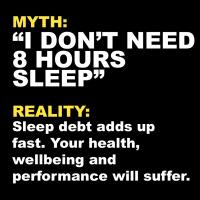
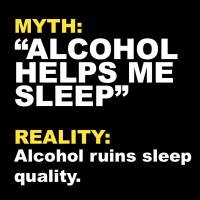
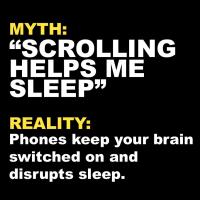
What is sleep?
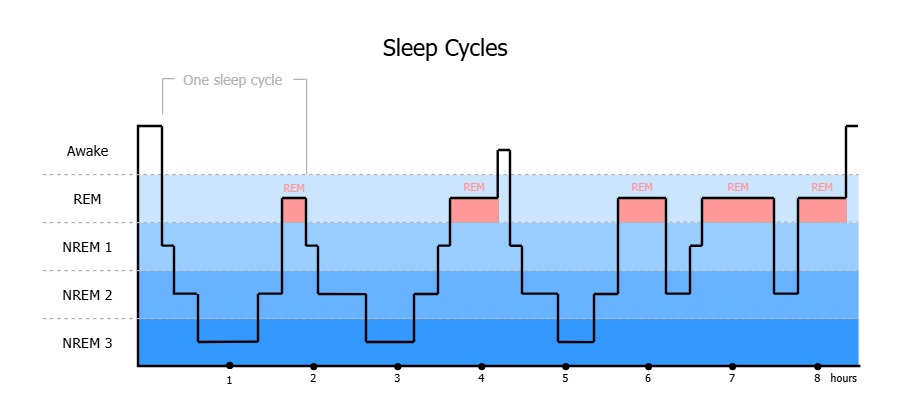
Sleep is an active body and brain recovery process. This process is best understood as a series of cycles. Each cycle consists of 4 stages: 3 stages of non-rapid eye movement (NREM) sleep and 1 stage of rapid eye movement (REM) sleep. As you can see by the number of red REM stages shown on the graph below, most adults progress through 4-6 sleep cycles over 8-hours of sleep.
As you sleep for longer, time spent in each stage changes. Looking at the graph below, the first part of the night contains the most deep blue NREM sleep; this is primarily when your body recovers. The later part of the night is mostly red REM sleep; this is primarily when your brain recovers.
NREM sleep is when your muscles, tissues, and immune system recover. In other words, NREM is when you physically recover from the day. NREM sleep happens over 3 stages.
- Stage 1: The few minutes as you fall asleep. Your muscles begin to relax and you may experience falling sensations. Stage 1 is easy to wake from.
- Stage 2: You spend most time in this stage. Your heart rate slows and body temperature drops. Stage 2 can be difficult to wake from.
- Stage 3: The deepest stage of sleep. Your breathing, heart rate, blood pressure, and body temperature all drop. Your brain waves become extremely slow. Stage 3 is most difficult to wake from, you will feel groggy or confused if you are woken during this stage.
REM sleep is when your emotions, memories, and stress consolidate. In other words, REM is when you psychologically recover from the day. REM sleep is just 1 stage.
- Stage 4: REM is a lighter stage of sleep. Your breathing, heart rate, blood pressure, and body temperature begin to increase. Your brain waves become faster. This is when you dream.
Check out these videos on sleep cycles and stages by Daniel Ford, Sleep and Performance Specialist and former NZDF Psychologist.
-
Intro to sleep stages
-
What is stage 1 sleep?
-
What is stage 2 sleep?
-
What is stage 3 sleep?
-
What is REM sleep?
-
What are sleep cycles?
Why is sleep important?
-
How much sleep should I be getting?
-
How is sleep measured?
-
How does sleep affect brain health?
-
How does sleep affect metabolic health?
-
Does sleep affect weight management?
-
Does sleep affect learning memory?
-
Does sleep affect heart health?
Sleep in the NZDF
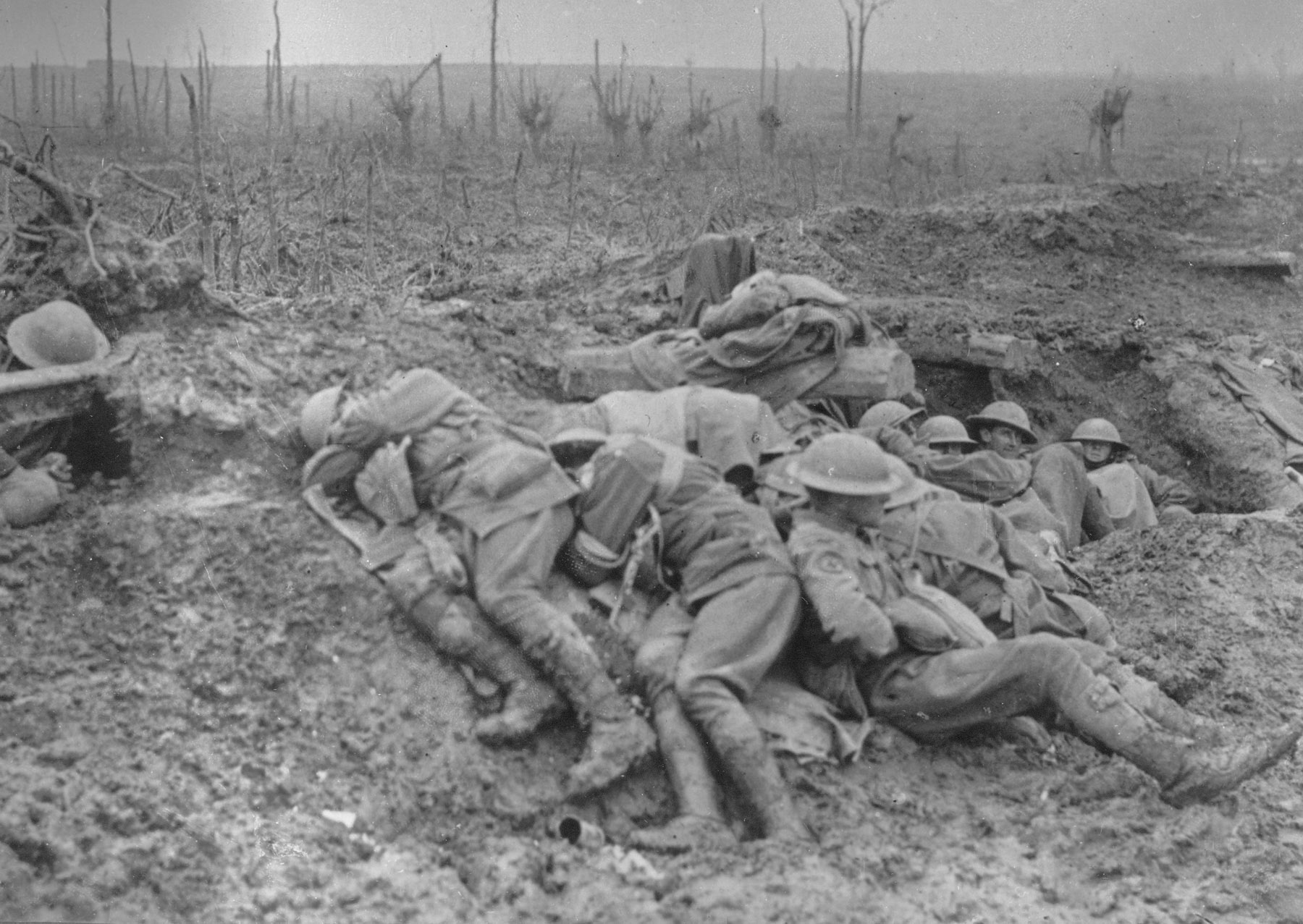
Sleep is important to meet the demands of your job. Equally, the demands of your job can make sleep hard to get. Long days, high workload, long commutes, international travel, time differences, living in close quarters, unfamiliar environments, threats, noise, adverse weather, extreme temperatures, and shift work can all contribute to sleep deprivation.
Sleep deprivation is particularly risky in the military context. Impaired reaction-times, awareness, decision-making and communication are just a few of the operational and safety risks associated with sleep deprivation.
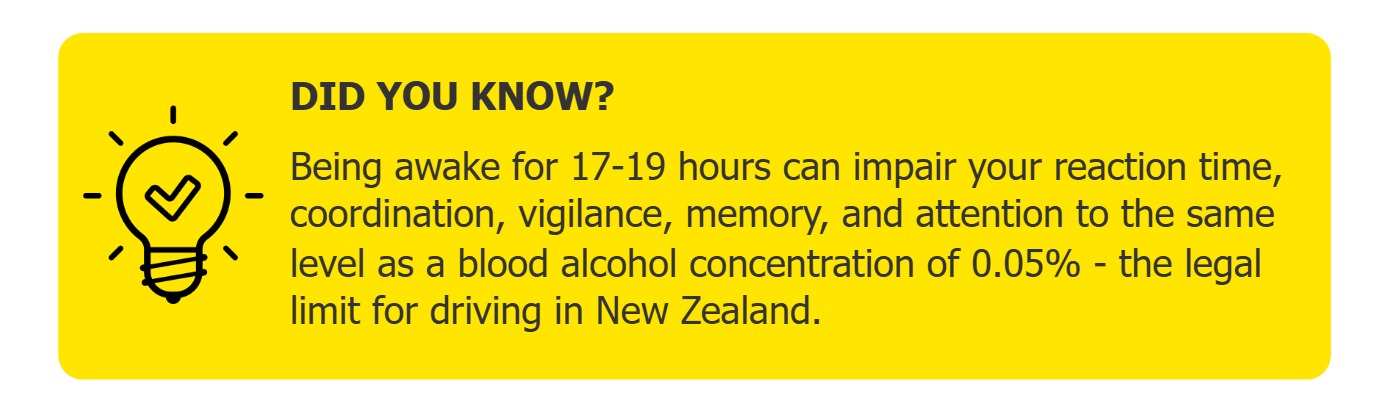
For these reasons, it’s important that you find and practice good sleep habits that work for you. If you make small and consistent changes to your behaviours and routine, this will help you fall asleep faster and maximise the quality of whatever sleep you can get. See the sections on Sleep habits and Sleep management strategies below for more information.
How much sleep do I need?
Optimal sleep duration varies from person to person; some need more, some need less. Find what works for you.
Sleep patterns change with age. If you are in your late teens or early 20s, you might need 8-10 hours. If you are 25 years or older, 7-9 hours may be enough.
Keep in mind: Quantity does not equal quality. It is possible for a long sleep to be poor quality. This can happen if your sleep cycles are disrupted or you are unable reach the deep, restorative stages of sleep. To improve the quality of your sleep, try practicing good sleep habits (see below).
What causes poor sleep?
Sleep habits
Sleep quality and duration can be improved through small and consistent habits. Generally, these habits aim to:
- Calm your nervous system and reduce brain activity.
- Reserve your bed for sleep (and sex) only.
By keeping your bed exclusively for sleep (and intimacy), you train yourself to associate getting into bed with falling asleep. On the other hand, reading, screen time, or having difficult conversations in bed trains you to stay alert.
Ultimately, the goal is to wind down before getting into bed. Only get into bed when you feel sleepy. This will reinforce a strong connection between your bed and sleep.
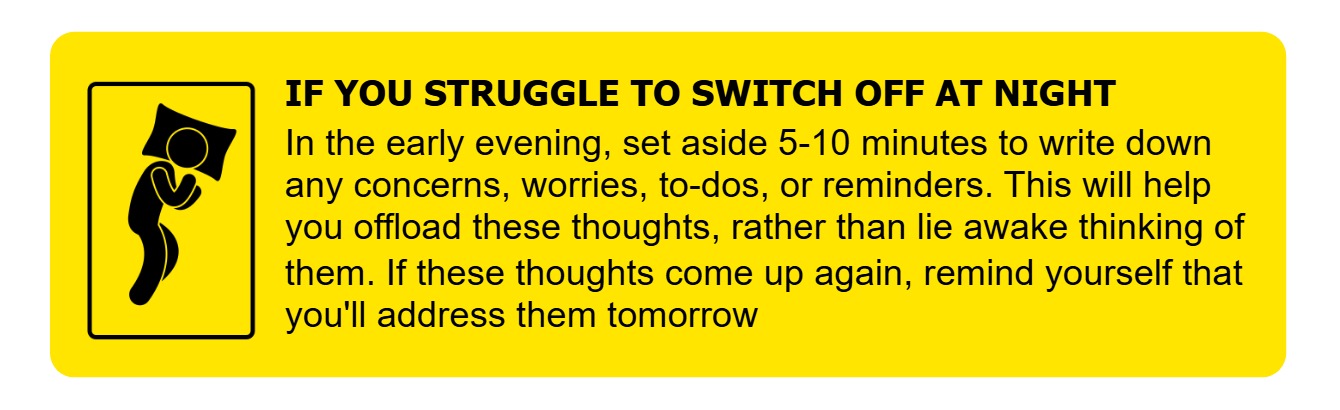
Here are some common sleep barriers, along with an alternative practices that can help restore healthy sleep patterns.
| Sleep barriers | Good sleep habits |
| Too much activity or stimulation before bed | Spend 30-60 minutes doing something non-stressful before going to bed, and avoid intense exercise in the evening. |
| Irregular sleep routines | Try to go to bed at the same time most nights (it will become a signal for your body that it is time for sleep), and get up at the same time most mornings. |
| Napping during the day | Keep naps short (less than 30 minutes), and not after mid-afternoon. |
| Watching TV, working, or being on electronic devices in bed | Use your bed only for sleep and sex. |
| Having a big meal just before bed | Avoid eating a large meal close to bedtime. A warm drink of milk and a banana may help support sleep if you are feeling hungry at bedtime. |
| Lying awake for hours | If you’re still lying awake after 20 minutes - get up, go to another room, and engage in a low energy task. Return to bed only when genuinely sleepy. Repeat as many times as needed. |
| Having caffeine late in the day | Avoid coffee, energy drinks, tea, cocoa, and cola drinks after midday. |
| Drinking alcohol late in the day | Avoid alcohol for several hours before going to bed (alcohol might help you fall asleep but causes a disrupted and poor quality sleep). |
| Smoking or vaping | Smoking or vaping (nicotine) will make you more alert. You may also have breathing-related sleep disturbances, caused by long-term smoking (such as sleep apnoea). Consider giving up smoking and vaping. |
| Frequent use of sleeping pills | You can quickly become dependent on sleeping pills, which will end up disturbing your sleep further. |
| Bright lights at night | A dark or lowlight environment signals your brain to produce melatonin, a hormone which improves sleep quality. |
Sleep management strategies
In the military, it’s not always possible to practice good sleep habits, such as avoiding stimulation before bed or having regular meals and bedtimes. Sometimes, you won’t even have a bed. Here are some strategies to manage your sleep during these times.
- Naps. If you have limited opportunity for sleep, such as an exercise or operation, nap where you can. Try nap for 10-30 minutes at a time. A short nap can improve your levels of alertness, productivity, and mood.
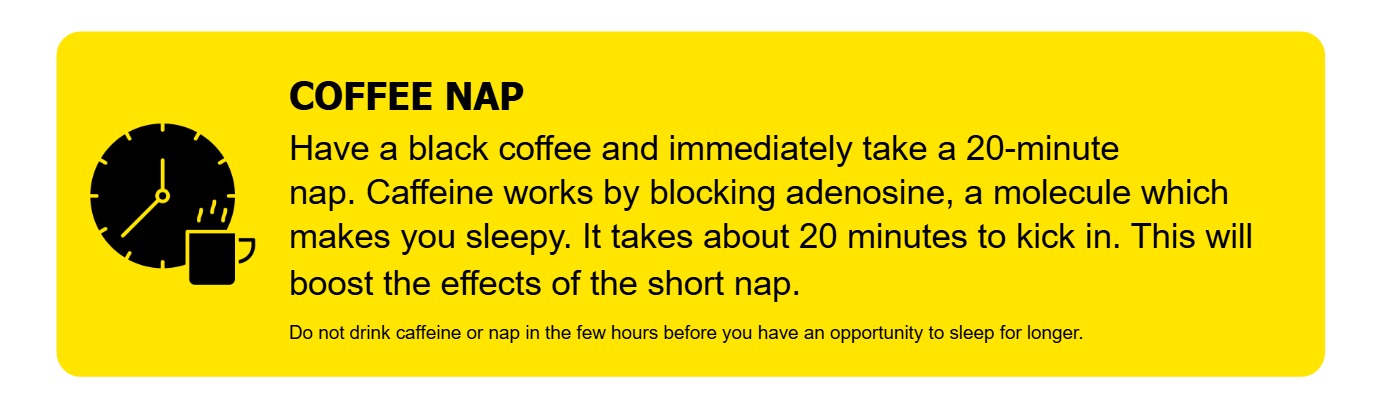
- Sleep Banking. You can prepare for sleep deprivation. If you know you are going to have limited opportunity for sleep, such as an exercise or operation, you can ‘bank’ sleep in advance. This will delay the effects of sleep deprivation, such as feelings of fatigue, emotional dysregulation, and muscle weakness. In the week leading up to a period of sleep deprivation, aim to get 1-2 extra hours of sleep each night. Do not do the opposite and try to build a tolerance for less sleep, this will not work.
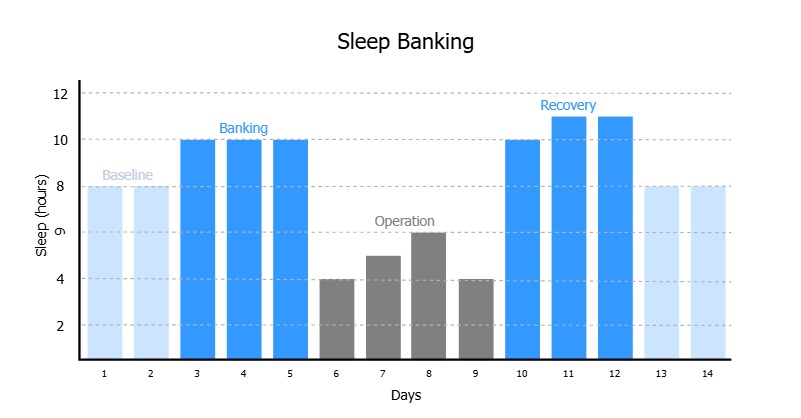
- Routine. Even if your schedule or environment is unpredictable, you can control your bedtime routine. In the same way you can train yourself to associate getting into bed with sleep, you can train yourself to associate other actions with sleep. Create a predictable bedtime routine, and consistently do everything in the same order. For example, brush your teeth, take off boots, then jacket, have a quick stretch, tuck your phone away, get into your sleeping bag, take some slow deep breaths, and relax each muscle group. Over time, repetitive actions will signal to your brain that you are safe and it is time for rest.
- Breathing Exercises. Your breath rate naturally slows and deepens during the first stages of sleep – NREM sleep. If you intentionally control your breathing to mimic NREM sleep, this can help ease you into a restful state. Taking deep and slow belly breaths, find a rhythm that works for you and try counting your breaths to keep your thoughts from wandering. There is a guided breathing exercise on the NZDF ResCo app which you can use to practice during the day.
- Progressive Muscle Relaxation. Throughout the day, particularly if you are stressed, your muscles can become tight and tense. If you intentionally relax your muscles, this signals to your brain that you are now safe and it is time to sleep. Progressive muscle relaxation consists of deliberate tension and release. If you first tense the muscle, this intensifies the feeling of release. Tense the below muscle groups for 3-5 seconds, then release and relax over 10-15 seconds. Breath in while tensing, breath out while releasing.
1. Left leg
2. Right leg
3. Both legs
4. Left arm
5. Right arm
6. Both arms
7. Face
8. Whole body
- Tips for shift work. If possible, gradually adjust your sleep schedule before a block of night shifts to help your body adapt. Maintain a consistent sleep window and routine, time meals as if it were daytime, and use caffeine strategically early in your shift – avoiding it within four hours of sleep. Use bright light to stay alert during work and minimise light exposure on the way home. When it's time to sleep, follow a wind-down routine and create a dark sleep environment using blackout curtains or an eye mask to help signal sleep.
- Tips for international travel. To minimise jet lag, gradually shift your sleep schedule by one to two hours towards your destination time zone in the days before travel. Once you arrive, seek bright natural light in the late morning and early afternoon to help reset your body clock. Keep naps short and avoid them after 1500, and use caffeine and exercise strategically during the day to maintain alertness – avoiding both in the evening so they don't interfere with sleep.
Interactive learning
Click on the image below to access this online course on improving sleep.

Support and resources
If you’ve tried the strategies above and are still having problems with sleep, you might benefit from getting additional support. Your Defence Health doctor or GP is always a good place to start. They can help you to understand your particular problem with sleep, and refer you to an appropriate specialist for further assessment if necessary.
Additional resources:
- A sleep diary can be a useful way to identify patterns that may be affecting your sleep, such as caffeine intake, exercise timing, stress, or inconsistent sleep schedules.
Tip: If you're planning to seek support from a doctor for sleep difficulties, try completing the diary for 1-2 weeks beforehand. Taking it to your appointment can help your healthcare provider better understand your sleep patterns and identify appropriate strategies for improvement.
You can download a sleep dairy here.
- Mindfulness practices and guided breathing exercises can be helpful in calming the mind. Click here for more information about mindfulness, and practice using the guided breathing exercises on NZDF ResCo app (download from the App Store or Google Play).
- Download a summary of the information above in our Sleep Tips guide here.